 Image 1 of 5
 Image 2 of 5
 Image 3 of 5
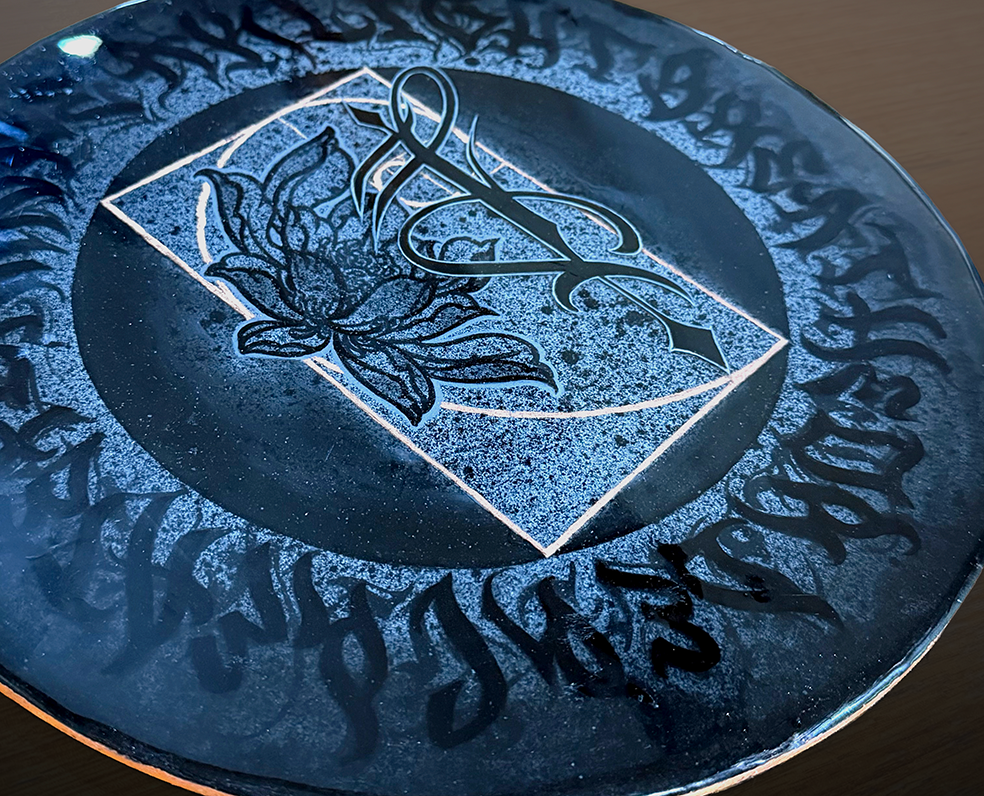 Image 4 of 5
 Image 5 of 5
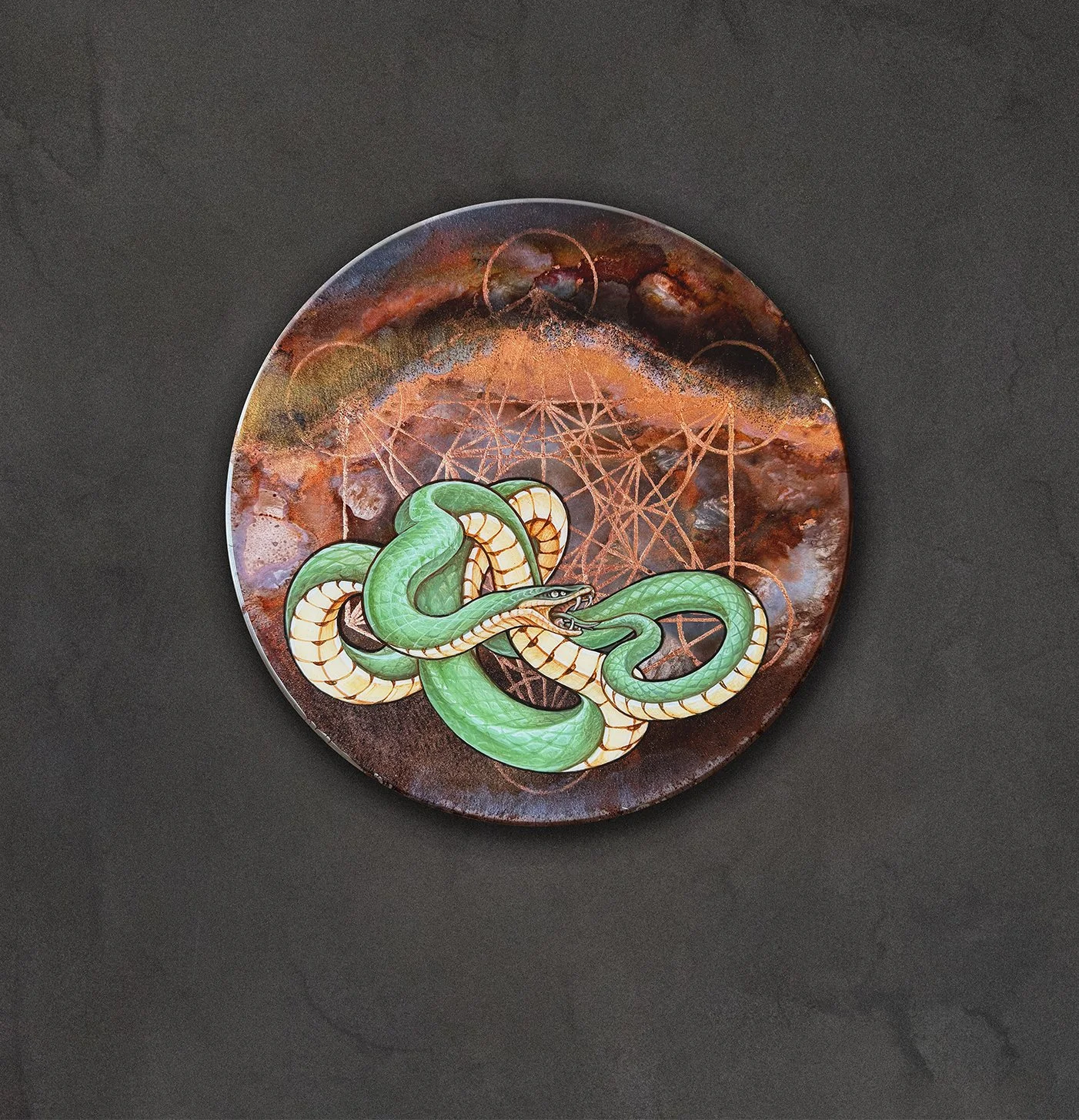
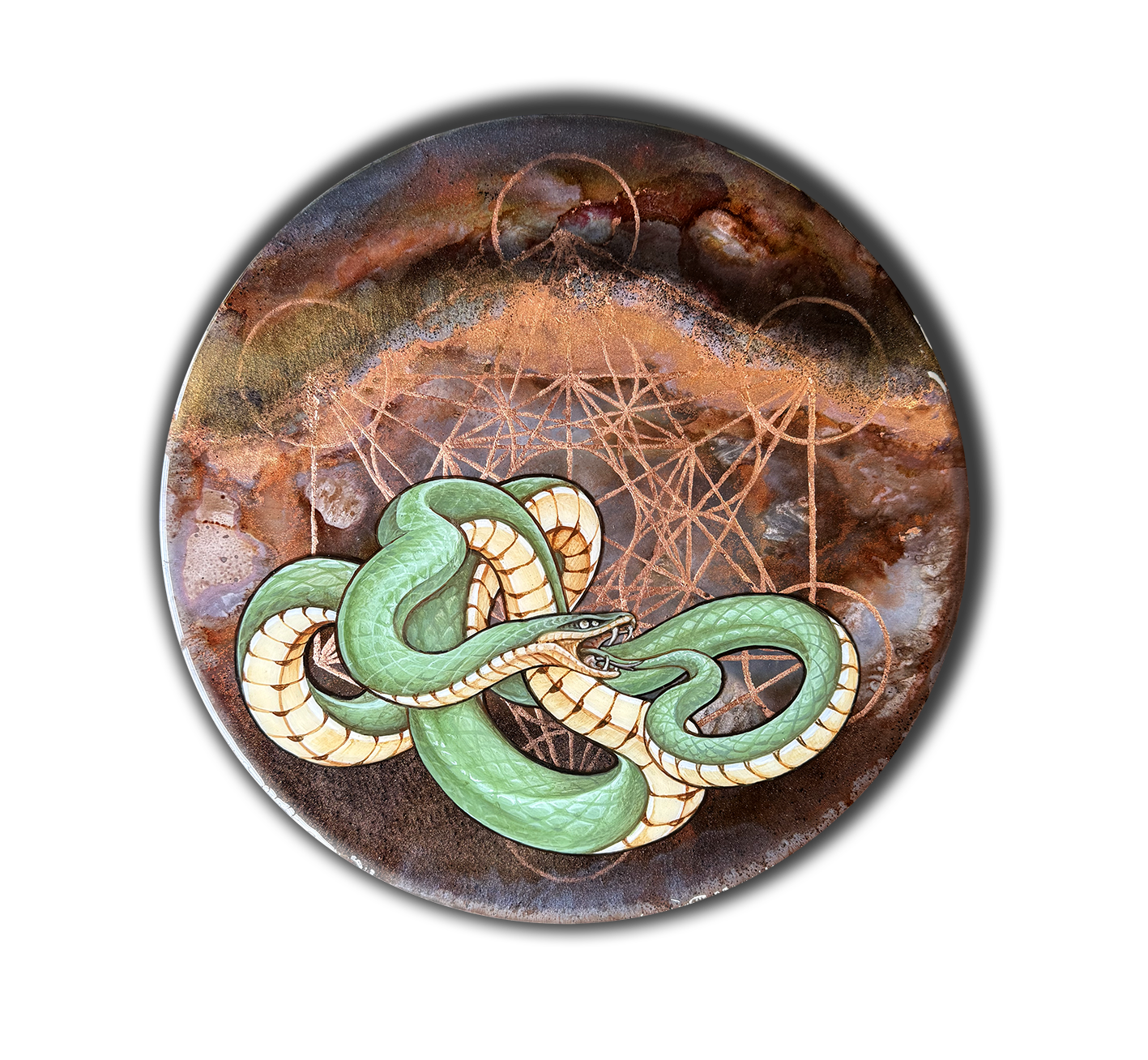
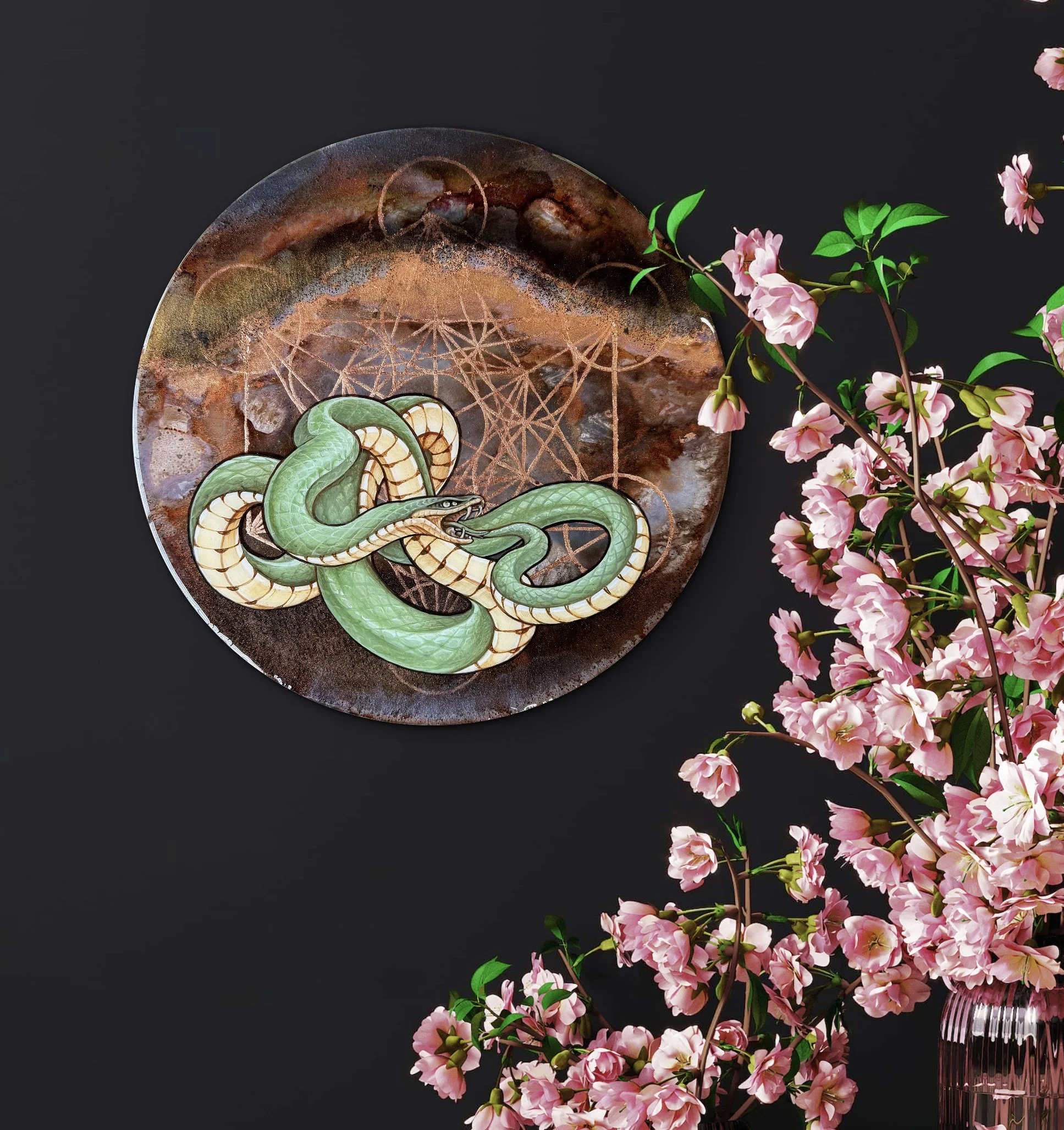
A controlled composition designed to stabilise perception, reduce environmental noise, and organise attention within a defined space.
Overview
Structured Emergence is built as a field-stabilising object—prioritising order, containment, and clarity over activation or amplification.
Where other works introduce movement or expansion, this piece is calibrated to:
reduce visual and cognitive noise
stabilise attention within the immediate environment
support slower, more deliberate interaction
Its effect is not additive.
It is subtractive—removing excess to reveal structure.
Geometry & Structural Function
The composition is governed by three primary elements:
Linear Lotus
A constrained growth pattern. Represents controlled emergence and regulated expansion rather than organic dispersion.
Fibonacci Spiral (Copper Axis)
Introduces proportional scaling and directional flow. Guides visual tracking inward through progressive ratio rather than abrupt focal contrast.
Central “I” Axis
A vertical reference line acting as a stabilisation point for visual orientation.
Functions as:
a fixed anchor for attention
a reference for spatial alignment
a return point within layered complexity
Together, these elements form a closed-loop visual system—minimising drift and reinforcing coherence.
Material Composition & Functional Properties
Embedded within a layered resin matrix:
Black Tourmaline → electrical grounding, charge dispersion, field stabilisation
Shungite → carbon-based conductivity, absorption of environmental interference
Selenite → crystalline structuring, refinement of energetic flow
Clear Quartz → signal amplification, coherence and pattern stabilisation
Tiger’s Eye (trace) → directional alignment, structural continuity
These materials are not used symbolically—they operate as complementary components within a conductive matrix, balancing absorption, amplification, and regulation.
Subsurface Encoding
Integrated through layered construction:
Speak light.
Breathe order.
Create form.
This sequence is embedded structurally rather than visually—functioning as a pattern influence rather than a directive.
Field Behaviour
When introduced into a space, the piece tends to:
reduce perceptual clutter
stabilise gaze and attention cycles
support cognitive settling in shared environments
create a consistent visual anchor without overstimulation
The effect is typically observed as:
increased order, reduced distraction, and improved spatial clarity
Application & Use
Designed for both passive placement and active interaction:
Base surface for water vessels or crystal arrangements
Central object for group sessions or structured dialogue
Visual anchor within workspaces or contemplative environments
At scale, it supports:
collective grounding
pacing of interaction
stabilisation of shared attention
Specifications
Format: Circular aluminium panel 29cm
Finish: Multi-layer resin with embedded mineral matrix
Surface: Black-on-black tonal field with copper geometric detailing
Backing: Felted rear
System Role
Within the SNRGY.art collection, this work functions as:
an anchor point
It provides structural stability within a broader system of more dynamic or expressive pieces.
Summary
A controlled, materially integrated composition designed to organise space through reduction rather than amplification.
Best suited to environments where clarity, structure, and sustained attention are required.
A controlled composition designed to stabilise perception, reduce environmental noise, and organise attention within a defined space.
Overview
Structured Emergence is built as a field-stabilising object—prioritising order, containment, and clarity over activation or amplification.
Where other works introduce movement or expansion, this piece is calibrated to:
reduce visual and cognitive noise
stabilise attention within the immediate environment
support slower, more deliberate interaction
Its effect is not additive.
It is subtractive—removing excess to reveal structure.
Geometry & Structural Function
The composition is governed by three primary elements:
Linear Lotus
A constrained growth pattern. Represents controlled emergence and regulated expansion rather than organic dispersion.
Fibonacci Spiral (Copper Axis)
Introduces proportional scaling and directional flow. Guides visual tracking inward through progressive ratio rather than abrupt focal contrast.
Central “I” Axis
A vertical reference line acting as a stabilisation point for visual orientation.
Functions as:
a fixed anchor for attention
a reference for spatial alignment
a return point within layered complexity
Together, these elements form a closed-loop visual system—minimising drift and reinforcing coherence.
Material Composition & Functional Properties
Embedded within a layered resin matrix:
Black Tourmaline → electrical grounding, charge dispersion, field stabilisation
Shungite → carbon-based conductivity, absorption of environmental interference
Selenite → crystalline structuring, refinement of energetic flow
Clear Quartz → signal amplification, coherence and pattern stabilisation
Tiger’s Eye (trace) → directional alignment, structural continuity
These materials are not used symbolically—they operate as complementary components within a conductive matrix, balancing absorption, amplification, and regulation.
Subsurface Encoding
Integrated through layered construction:
Speak light.
Breathe order.
Create form.
This sequence is embedded structurally rather than visually—functioning as a pattern influence rather than a directive.
Field Behaviour
When introduced into a space, the piece tends to:
reduce perceptual clutter
stabilise gaze and attention cycles
support cognitive settling in shared environments
create a consistent visual anchor without overstimulation
The effect is typically observed as:
increased order, reduced distraction, and improved spatial clarity
Application & Use
Designed for both passive placement and active interaction:
Base surface for water vessels or crystal arrangements
Central object for group sessions or structured dialogue
Visual anchor within workspaces or contemplative environments
At scale, it supports:
collective grounding
pacing of interaction
stabilisation of shared attention
Specifications
Format: Circular aluminium panel 29cm
Finish: Multi-layer resin with embedded mineral matrix
Surface: Black-on-black tonal field with copper geometric detailing
Backing: Felted rear
System Role
Within the SNRGY.art collection, this work functions as:
an anchor point
It provides structural stability within a broader system of more dynamic or expressive pieces.
Summary
A controlled, materially integrated composition designed to organise space through reduction rather than amplification.
Best suited to environments where clarity, structure, and sustained attention are required.